EDM stands for electronic dance music, which means techno is technically a type of EDM. But in everyday conversation, people often use “EDM” to mean mainstream festival dance music: big hooks, dramatic builds, huge drops and bright mainstage energy.
That is why “EDM vs techno” can get confusing. Sometimes people are comparing a broad category with one genre inside it. Other times, they are comparing mainstream festival EDM with techno as a more specific club and rave sound.
A simple way to think about it is this:
EDM is often built around big moments. Techno is often built around movement, repetition, and gradual change.
That is not a perfect rule. There are melodic techno tracks with huge emotional peaks, and there are festival EDM tracks that settle into a groove. But it is a useful starting point if you are trying to understand what you are hearing, what kind of event you are going to, or what your friends mean when they say they like techno but “not EDM.”
To make this guide more practical, we have included attendee-style observations based on common things regular festival and club-goers often say when comparing the two sounds.
Why “EDM vs techno” can be confusing
There are two common uses of EDM.
The first is the broad meaning: electronic dance music. In that sense, EDM includes house, techno, trance, dubstep, drum and bass, hardstyle and many other styles.
The second is the narrower everyday meaning: mainstream festival dance music. This is the sound many people associate with large stages, big drops, vocal hooks, fireworks, confetti, and high-energy festival sets.
So when someone says, “I like techno, not EDM,” they are usually not making a technical genre argument. They probably mean they prefer a darker, more repetitive, more underground or club-focused sound over the polished mainstage festival style.
One regular festival-goer might describe the difference like this:
“EDM feels like it wants everyone to put their hands up at the same time. Techno feels more like you lock into the rhythm and stay there.”
That is not a formal definition, but it captures how many people experience the difference on a dancefloor.
EDM and techno at a glance
These are tendencies, not strict rules.
|
Feature |
Mainstream festival EDM |
Techno |
|
Main focus |
Hooks, builds, drops and emotional release |
Rhythm, texture, repetition and gradual development |
|
Energy |
Often dramatic, bright and explosive |
Often steady, hypnotic, dark, driving or industrial |
|
Arrangement |
Clear breakdowns, build-ups and drops |
Layered progression and subtle changes over time |
|
Vocals |
Full vocal hooks are common in many styles |
Often instrumental, though vocal fragments or full vocals can appear |
|
Melody |
Usually easy to identify and often central |
Can be subtle, repetitive, abstract or absent |
|
Dancefloor feeling |
Big shared moments |
Continuous momentum |
|
Common setting |
Festivals, clubs, commercial playlists, large stages |
Clubs, warehouses, raves, festivals, underground rooms |
|
Best way to listen |
Follow the build and release |
Follow the groove and small changes |
A lot of people discover the difference only after going to both types of events. On a mainstage EDM crowd, the energy often rises and falls around obvious peaks. At a techno event, the energy may feel more continuous. Instead of waiting for the drop, you settle into the rhythm and notice how the track shifts over time.
What mainstream festival EDM usually sounds like
When people use EDM in the narrower sense, they are usually talking about a polished, high-impact festival sound.
Common features include:
-
big melodic hooks
-
emotional vocal lines
-
dramatic breakdowns
-
rising tension before a drop
-
a clear moment where the beat returns
-
bright synths and wide, polished production
-
crowd-facing moments designed for large stages
Festival EDM often makes its structure easy to follow. Even if you do not know the song, you can usually feel when the build is happening and when the release is coming.
That is part of its appeal. The music is often designed to create shared moments across a huge crowd. The breakdown gives everyone a pause, the build creates anticipation, and the drop gives the crowd a clear moment to react together.
One common attendee-style description is:
“At an EDM festival set, I feel like the DJ is taking the whole crowd from one big moment to the next. You know when the drop is coming, and that is part of the fun.”
That does not mean festival EDM is simple or lesser. A strong festival track still needs arrangement, production skill and emotional control. But its impact is often built around contrast: quiet to loud, tension to release, breakdown to drop.
What techno usually sounds like
Techno developed in and around Detroit in the 1980s, with Black artists central to its early development. Juan Atkins, Derrick May and Kevin Saunderson are widely associated with its beginnings. Berlin later became an important center for techno, but describing techno as simply a German invention misses its Detroit roots.
Techno is usually more focused on rhythm, repetition, sound design and gradual change than on obvious hooks or singalong choruses.
Common features include:
-
steady four-on-the-floor kick drums
-
repeated basslines or synth patterns
-
evolving percussion
-
subtle changes in texture
-
fewer obvious drops
-
hypnotic or driving momentum
-
darker, stripped-back or industrial sounds in some styles
-
long-form mixing in DJ sets
The key word is movement. A techno track might not change dramatically every 30 seconds. Instead, one hi-hat enters, a synth becomes brighter, the bass shifts slightly, the percussion gets denser, or a repeated pattern becomes more intense.
To someone used to festival EDM, techno can initially sound repetitive. But to regular techno listeners, that repetition is the point. The details matter because the track gives you time to notice them.
A common techno-fan explanation sounds like this:
“With techno, I’m not waiting for the song to explode. I’m listening to how the groove keeps changing without fully breaking.”
That is one reason techno often makes more sense in a club, warehouse or long DJ set than in a short social-media clip. The music is built for immersion.
The biggest difference: drops vs development
The easiest way to hear the difference is to ask what the track wants you to focus on.
In mainstream festival EDM, your attention is often directed toward a big event: the vocal hook, the build-up, the drop, the hands-in-the-air moment.
In techno, your attention is often directed toward the groove itself: the kick, bass, percussion, texture and slow changes across time.
Think of festival EDM as more cinematic. It often has clear peaks and emotional payoffs.
Think of techno as more hypnotic. It often works by pulling you deeper into a rhythm.
Neither approach is better. They simply create energy in different ways.
If you are new to both, try listening to a full track instead of a short clip. A 15-second clip may show you the most explosive part of a festival EDM song, but it may completely miss what makes a techno track work.
Do not judge by the kick drum alone
A steady kick drum on every beat is often called four-on-the-floor. It appears in techno, but it also appears in house, trance, disco, tech house and plenty of other dance music.
So a strong, steady kick does not automatically make a track techno.
Instead, listen to what happens around the kick.
Ask yourself:
-
Is the song built around a big hook or vocal?
-
Does it keep setting up dramatic drops?
-
Does it develop through small changes?
-
Are the percussion and bass doing most of the work?
-
Is the track trying to create a big release, or a steady trance-like state?
Those questions are more useful than simply asking whether the beat is fast or heavy.
Do not judge by speed either
BPM can help describe a track, but it does not define the genre by itself.
Some techno is fast. Some is slower and deeper. Some festival EDM is fast. Some is mid-tempo. Two tracks can have the same BPM and still feel completely different because of the drums, bass, arrangement and sound design.
A fast track with big vocals, huge builds and massive drops may still feel like festival EDM. A slower track with a stripped-back groove and evolving percussion may feel much closer to techno.
Speed matters, but it is only one part of the picture.
What the crowd feels like
The crowd experience can also feel different.
At a mainstream EDM festival stage, the crowd often reacts together to obvious moments. People jump at the drop, sing the vocal hook, film the big build-up or wait for the pyrotechnics.
At a techno event, the crowd may look more locked in. There may be less jumping and more continuous dancing. The energy can feel less like a series of explosions and more like a long, steady build.
One common observation from people who attend both types of events is:
“At EDM sets, I notice the crowd reacting to the DJ. At techno sets, I notice the crowd reacting to the groove.”
That is not always true, of course. A techno DJ can create huge crowd moments, and an EDM DJ can play deeper, groovier sections. But as a broad dancefloor difference, it is useful.
EDM vs techno examples
If you want to train your ear, start with full tracks. Do not rely only on short clips.
|
Track |
What to listen for |
|
Martin Garrix - “Animals” |
Listen for the build-up and the clear impact of the main drop. |
|
Hardwell - “Spaceman” |
Notice the lead synth, the big-room structure and the dramatic energy shifts. |
|
Model 500 - “No UFO’s” |
Use this as an early Detroit techno reference point and listen for rhythm, mood and machine-like movement. |
|
Jeff Mills - “The Bells” |
Follow the repeated musical figure and how it interacts with the percussion. |
The point is not that four tracks can represent every version of EDM or techno. They cannot. The point is to hear the contrast between music built around big festival moments and music built around repetition, rhythm and gradual pressure.
After that, listen to a longer DJ mix. This is especially important for techno. A single track can introduce the sound, but a mix shows how energy develops over 30, 60 or 90 minutes.
Is techno a type of EDM?
Yes, technically. Techno is part of electronic dance music.
But socially, people do not always use the word EDM in the technical sense. Many people use EDM to mean mainstream festival dance music. That is why someone might say they like techno but not EDM.
They usually mean:
“I like electronic dance music, but not the big-room festival style most people call EDM.”
So both statements can be true:
-
Techno is a type of EDM in the broad sense.
-
Techno is different from “EDM” when EDM is being used to mean mainstream festival dance music.
Context matters.
Is tech house the same as techno?
No. Tech house is not just another name for techno.
Tech house draws from both house and techno, but it usually has a different feel. It often has the groove and swing of house, with some of the cleaner or more mechanical elements associated with techno.
The shared word “tech” can be confusing, especially on event posters. But tech house and techno are not interchangeable.
If you are choosing an event, do not rely only on the genre label. Listen to the artists on the lineup. One “tech” night might be bouncy and vocal-led. Another might be darker, faster and more intense.
What does this mean for choosing a rave or festival?
Genre labels are useful, but they are not enough.
Before buying tickets, check the lineup. Listen to a few recent sets or tracks from the artists. This tells you much more than the event description alone.
If you are going with friends, share a few songs first. “I like EDM” can mean one person wants big vocal festival anthems while another wants dark warehouse techno until 4am.
A quick listening check can prevent a mismatched night.
Here is a simple way to choose:
-
If you want big drops, vocals, lights, fireworks and obvious crowd moments, a mainstream EDM festival stage may suit you.
-
If you want a darker, more repetitive, more immersive dancefloor experience, a techno night may suit you.
-
If you want something groovy and accessible between house and techno, try tech house.
-
If you are unsure, choose a multi-stage event so you can move between sounds.
You do not need to pick a permanent side. Plenty of people enjoy festival EDM one weekend and a long techno set the next.
Do EDM and techno events have different dress codes?
The music genre alone does not decide the dress code. The venue, city, event brand and crowd matter more.
That said, different scenes often have different style tendencies.
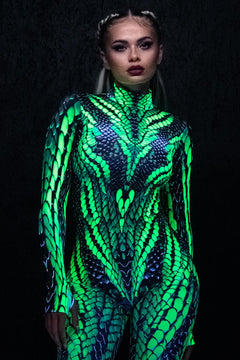
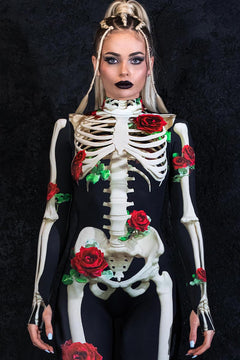
At mainstream EDM festivals, you may see brighter colours, coordinated rave sets, statement pieces, glitter, mesh, reflective fabrics and bold accessories.
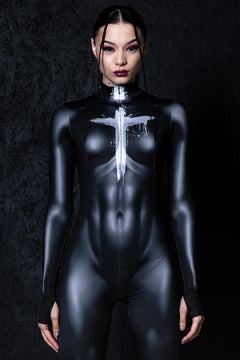
At techno events, especially club or warehouse nights, you may see more black, utility-inspired outfits, boots, leather-look textures, oversized silhouettes and minimal styling.
These are not rules. You do not need to dress a certain way to belong. The best outfit is one you can dance in comfortably.
Practical details matter more than copying a scene:
-
wear shoes you can stand and dance in
-
bring secure storage for essentials
-
check the venue’s bag policy
-
consider temperature changes before and after the event
-
choose breathable pieces if you will be dancing for hours
If you want a darker techno-inspired look, start with a black base and add interest through texture, shape or one strong detail.
If you prefer a brighter EDM festival look, build around a statement piece, print or coordinated set.
The goal is comfort, confidence and movement.

@marenavasquez wearing Psychedelica Set
Common myths about EDM and techno
Myth 1: Techno is just faster EDM
Not true. Techno is not defined by speed. It is defined more by rhythm, repetition, sound design and how the track develops.
Myth 2: EDM always has vocals
Not always. Many mainstream EDM tracks use vocals, but plenty are instrumental or use only short vocal samples.
Myth 3: Techno never has melody
Techno can be melodic, minimal, industrial, hypnotic, emotional, abrasive or stripped back. Melody can be central, subtle or almost absent.
Myth 4: All rave music is techno
No. A rave can include techno, house, trance, drum and bass, hardstyle, dubstep, garage and many other styles.
Myth 5: If you like one, you cannot like the other
You can absolutely enjoy both. They offer different kinds of energy.
How to tell the difference quickly
When you hear a track, ask yourself these questions:
Am I waiting for a big drop?
That points more toward mainstream festival EDM.
Am I locked into a repeated groove?
That points more toward techno.
Is there a big vocal or melody leading the track?
That is common in festival EDM, though not exclusive to it.
Are small changes in percussion and texture doing most of the work?
That is common in techno.
Does the track feel like it is moving from one big section to another, or slowly evolving?
Big sections suggest festival EDM. Slow evolution suggests techno.
Again, these are clues, not laws.
EDM vs techno Qs
Read the questions below.
Is techno a type of EDM?
Yes. In the broad sense, techno is a type of electronic dance music. But when people compare EDM and techno, they usually mean mainstream festival EDM versus techno.
What is the main difference between EDM and techno?
Mainstream festival EDM often focuses on hooks, builds and drops. Techno often focuses on rhythm, repetition, texture and gradual development.
Is techno always dark?
No. Some techno is dark, industrial or intense, but other techno can be melodic, warm, euphoric or minimal.
Does techno have drops?
It can, but drops are usually not the main point in the same way they often are in festival EDM. Techno often builds energy more gradually.
Is EDM more commercial than techno?
Mainstream festival EDM is often more commercial and radio-friendly, especially when it uses vocals and big hooks. Techno can also be popular and festival-sized, but it is often associated with clubs, underground scenes and longer DJ sets.
Is techno harder to get into?
It depends on the listener. Some people connect with techno immediately. Others need to hear it in the right setting, especially through a longer DJ set rather than short clips.
Is all electronic festival music EDM?
In the broad sense, yes. But in everyday use, people often use EDM to mean a particular festival sound, not every electronic genre played at festivals.
How do I know what kind of event I am buying tickets for?
Check the lineup and listen to the artists. Event descriptions can be vague, and genre labels can overlap. A few recent tracks or live sets will tell you much more than the poster alone.
Final answer: EDM vs techno
EDM is the broad family of electronic dance music, and techno belongs inside that family. But in everyday conversation, EDM often means mainstream festival dance music, while techno refers to a more specific genre built around rhythm, repetition, texture and gradual change.
Mainstream festival EDM often gives you big hooks, dramatic builds and explosive drops. Techno often gives you a steady groove, evolving layers and a more hypnotic dancefloor experience.
One is not better than the other. They simply work differently.
If you are choosing what to listen to or which event to attend, do not stop at the genre label. Listen to the artists, check the lineup and think about the kind of night you want: big shared moments, deep rhythmic immersion, or a bit of both.