Sonic Bloom Festival Outfits
Shop Sonic Bloom Festival Outfits
Our Sonic Bloom collection covers bodysuits, two-piece sets, dresses, separates and layering pieces, sizes XS to XXL. This is a camping festival in the Colorado mountains, and altitude is the thing that shapes everything you pack. At elevation the sun is stronger, the air is dry, and the temperature difference between afternoon and pre-dawn is larger than at almost any other festival on our list. A minimal daytime outfit and a genuine warm layer aren't a compromise here, they're both necessary.
What Altitude Actually Does to Your Weekend
Sonic Bloom is held in the Colorado Rockies at roughly 7,000 feet, and that's not a detail, it's the defining condition.
Thinner air means less atmosphere filtering UV, so sunburn happens considerably faster than at sea level even when the temperature feels mild. The general figure is that UV intensity rises meaningfully for every thousand feet of elevation, which means a Colorado mountain afternoon burns skin faster than a beach at the same temperature.
Thin dry air also holds very little heat, so once the sun goes down the temperature falls fast. The swing between a warm mountain afternoon and 3am can be forty degrees or more. That's a bigger gap than the desert, which is already the benchmark most people use.
The third effect is on you rather than your clothes. Elevation causes dehydration faster, and dry mountain air pulls moisture from skin, which matters for how body glitter and gems adhere and for how comfortable you are across four days.
Sun Protection Without Covering Up
The tension at a high-altitude festival is that it's warm enough to want minimal coverage while the sun is doing more damage than the temperature suggests.
Sunscreen alone is unreliable across a full day, since it wears off with sweat and almost nobody reapplies as often as needed. Fabric is more consistent, which makes a lightweight long sleeve genuinely useful at a mountain festival in a way it isn't at a coastal one.
The practical version: a mesh or lightweight long sleeve piece worn over a minimal base gives you sun coverage with airflow, and it doubles as a layer when the temperature drops. Cold shoulder and cut-out sleeves give the same effect with more ventilation. See long sleeve bodysuit styles and matching two piece rave fits where you can swap the top half as conditions change.
Shoulders, the tops of arms and the back of the neck burn first and are hardest to reach. A hat does more at altitude than at sea level, and sunglasses matter given both UV and reflected glare.
The Temperature Swing Is Bigger Than the Desert
Most people plan for desert-style day-night swings. Colorado at 7,000 feet is more extreme, and it catches out people who've done Nevada festivals and think they've calibrated for it.
An eighty-degree afternoon can become a forty-degree pre-dawn. That's not a jacket-optional situation, and there's no way to bridge it with a single outfit.
What works: full-length coverage for the night rather than a layer over shorts. Leggings, catsuits or full bodysuits keep your legs covered, which matters more than most people expect, since legs lose heat fast when you stop moving. Layering the top half only leaves the bottom half exposed.
Velvet is worth considering here for the same reason it works at cold-weather festivals: it retains heat and suits evening lighting. See black festival apparel and purple rave clothes for pieces that work across both ends of the day.
Dry Air and What It Does to Glitter
A mountain festival is the opposite of a humid one, and it changes the practicalities of everything you put on your skin.
Body glitter and face gems adhere better in dry air than humid, since skin isn't damp and adhesive sets properly. That makes Colorado one of the better festivals for elaborate glitter work.
The trade-off is that dry air dehydrates skin, so adhesive can lift as skin dries and tightens across a long day. Moisturising before applying helps more than it does at a humid festival, and setting spray does real work here.
Dry air also means static, which affects synthetic fabric. Fitted pieces can cling in ways they don't in humidity, and mesh layers stick to whatever's underneath. A light anti-static spray or moisturised skin reduces it.
Colors and Prints for a Mountain Setting
The backdrop is forest, rock and open sky, with strong clear light during the day and dark skies at night given limited light pollution.
High-altitude daylight is unusually clear, so colors read more saturated than they do in hazier air. Bright shades genuinely pop here. See pink rave apparel, yellow festival clothes and blue rave apparel.
Sonic Bloom leans psychedelic and art-focused rather than mainstream EDM, so bold prints and handmade-feeling pieces suit the crowd better than a polished club look. Our trippy rave clothes and rainbow festival clothes both sit naturally in that setting, as do one-off pieces from unique festival clothes.
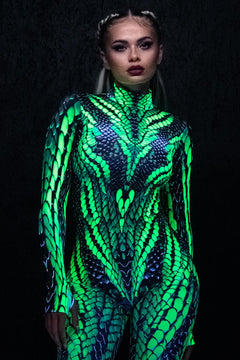
For night stages, UV-reactive shades work where the production supports it. Green rave clothes and neon shades respond well under blacklight.
What We Stock for Sonic Bloom
-
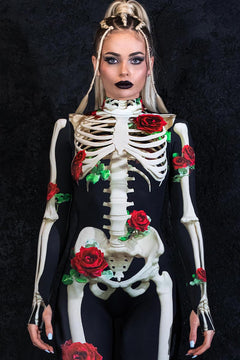
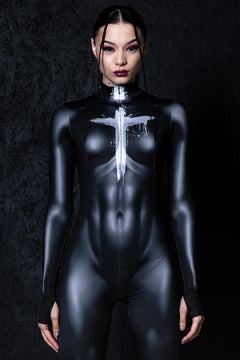
Bodysuits and catsuits: Full-length coverage for cold nights, and no waist gap for wind.
-
Two-piece sets: The most flexible option given the temperature range, since you can change half the outfit.
-
Long sleeve pieces: Sun protection during the day and warmth at night, which is a rare combination of uses.
-
Leggings and full-length bottoms: More important here than at a hot festival, since legs lose heat fast at night.
-
Mesh layers: Airflow with sun coverage, and a light layer once it cools.
-
Dresses: Worn with leggings underneath for the night, which is standard rather than a compromise at altitude.
Fabric for High Altitude
-
Polyester blends: Dry fast, pack small, resist creasing, and take the fluorescent dye that responds at night stages.
-
Spandex: For fitted pieces. Cold firms up elastane, so a set that fits well at noon can feel tighter by 3am.
-
Mesh: The best compromise between sun coverage and airflow for daytime.
-
Velvet: Genuinely practical for the night half, retaining heat and catching stage lighting well.
-
Avoid heavy cotton: It holds sweat, dries slowly even in dry air once saturated, and is cold against skin once the temperature drops.
One altitude-specific note: intense UV degrades dye and elastane faster than at sea level, so bright pieces worn across multiple mountain festivals will fade sooner than the same pieces worn at lower elevation.
Camping in the Mountains
Dry air is easier to camp in than humid, since clothes actually dry overnight and nothing develops mildew smell. That's the one respect in which this is a gentler camping festival than a southern one.
The problem is cold. Tents at altitude get genuinely cold before dawn, and anything you're planning to wear the next day should be inside your sleeping bag or a dry bag rather than lying out, since it'll be cold enough to be unpleasant to put on.
Dust is present but less pervasive than at a desert event, and mountain ground drains better than a wooded site. Pale colors survive better here than at a mud-prone festival.
Care
Sunscreen is the main enemy at a high-altitude festival, since you'll apply more of it than anywhere else and it breaks down elastane on contact.
Rinse pieces in cold water at the end of each day where possible. Dry mountain air means they'll actually dry overnight, which is an advantage over humid festivals. Anything with heavy sunscreen contact benefits from a proper wash rather than just airing.
Once home: cold water, inside out to protect prints and reduce abrasion, no fabric softener on stretch pieces since it reduces recovery, and no dryer on spandex blends. Dry in shade rather than direct sun, which matters more for pieces already exposed to high-altitude UV all weekend.
Accessories
Sun protection first: a hat that stays on, proper sunglasses, and lip balm with SPF, since lips burn quickly at elevation and nobody thinks about it.
Water is a genuine consideration rather than a footnote. Altitude dehydrates faster, so a bottle or hydration pack matters, which affects what bag you carry. A small backpack over a fanny pack for that reason.
Layers you can carry: something warm packed for the night, since you won't want to walk back to a tent mid-set. Closed shoes for mountain terrain, which is rockier and more uneven than a field. Glitter and gems work well here given the dry air, provided you moisturise first and set them properly.
Other Festivals
For other events with big day-night swings, see EDC festival apparel and Burning Man rave apparel, both desert festivals where the swing is large but the altitude effect on UV is less pronounced.
For other outdoor camping festivals with a psychedelic and art-led crowd, Lucidity festival apparel and Lightning in a Bottle rave clothes, both in California.
For humid camping conditions, which need close to the opposite packing approach, Bonnaroo festival apparel and Okeechobee festival clothes.
Sonic Bloom Outfit FAQs
Read the common questions we get asked.
What should I wear to Sonic Bloom?
A minimal base for the day with a lightweight long sleeve or mesh layer for sun, and genuine full-length warmth for the night. At 7,000 feet the swing between afternoon and pre-dawn can exceed forty degrees, so a single outfit won't bridge it. Leggings or a catsuit matter more than a jacket over shorts.
How much does altitude affect sunburn?
Considerably. Thinner air filters less UV, so you burn faster at 7,000 feet than at sea level even when it feels mild. Sunscreen wears off with sweat and most people underapply, so lightweight fabric coverage is more reliable across a full day. Shoulders, upper arms and the back of the neck go first.
Does it get cold at night at Sonic Bloom?
Yes, and more than at desert festivals people often use as a benchmark. Thin dry mountain air holds almost no heat, so temperatures fall fast once the sun goes down. Full-length coverage works better than layering only the top half, since legs lose heat quickly once you stop dancing.
Does glitter work in dry mountain air?
Better than at a humid festival, since skin isn't damp and adhesive sets properly. The catch is that dry air dehydrates skin across a long day and adhesive lifts as skin tightens, so moisturise before applying and use a setting spray. Static is also more noticeable on synthetic fabric in dry air.
Is Sonic Bloom a camping festival?
Yes, in the Colorado mountains. Dry air makes it easier to camp in than a humid festival, since clothes dry overnight and nothing develops mildew smell. The trade-off is cold, so keep the next day's outfit inside your sleeping bag or a dry bag rather than leaving it out in the tent.
Sizing
Sizes run XS to XXL. Fit depends on the garment, so check the size chart on each product page. Two altitude-specific points: leave room to layer over a fitted base rather than sizing it skin tight, and cold firms up elastane, so a piece that fits well in a warm mountain afternoon can feel noticeably tighter before dawn.