A rave is an all-night dance party centered around electronic dance music (EDM). DJs play continuous sets for attendees. These events often include elaborate light shows, visual art, and a communal atmosphere. The culture promotes peace, love, unity, and respect (PLUR) among its participants, creating an immersive experience.
A rave is an extended dance event built around electronic dance music, usually led by one or more DJs and designed to create an immersive, communal experience. At its simplest, it is a dance party. In practice, a rave is more than that: it combines music, sound systems, lighting, visual effects, venue design, shared social codes, and a strong sense of collective energy.
Traditional raves were often held in warehouses, fields, abandoned buildings, or other temporary spaces. Many were informal or illegal, especially during the early years of the movement. Modern raves can still happen underground, but the word is also used for large legal festivals, club nights, and electronic music events with elaborate stages and professional production.
What separates a rave from a standard concert or nightclub event is the emphasis on continuous dancing, electronic music, sensory immersion, and community. The performer is usually not a singer at the front of the room, but a DJ shaping the energy of the crowd over time. The audience is not just watching; it is participating.

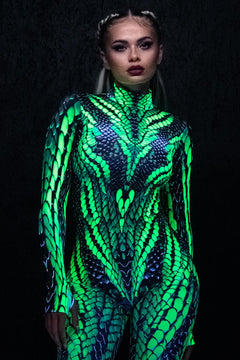
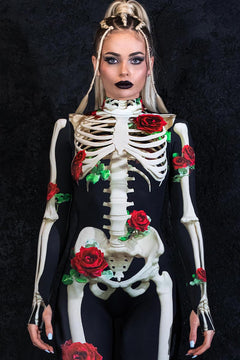
@miamistalli wearing Aurora Venom Bodysuit
The Core Elements of a Rave
Most raves are built from four essential elements:
Music: Electronic dance music is the foundation. Genres may include house, techno, trance, drum and bass, hardcore, jungle, garage, dubstep, hardstyle, and many others.
Space: Raves often transform ordinary or unconventional locations into temporary dance environments. Warehouses, fields, clubs, hangars, basements, and festival grounds can all become rave spaces.
Production: Lighting, lasers, fog, projections, visuals, sound design, stage architecture, and art installations create the sensory world of the event.
Community: Rave culture has long been associated with openness, self-expression, and the ethos known as PLUR: Peace, Love, Unity, and Respect.
A rave works because these elements reinforce one another. The music drives the body, the lights and sound reshape the environment, the crowd creates shared momentum, and the venue becomes a temporary world outside ordinary daily life.

@lovettlolz & @lukevad3r & @katiekayyyy
The Music: Electronic Dance Music at the Center
Electronic dance music is the heart of rave culture. Unlike many pop or rock concerts, the music at a rave is usually continuous. A DJ mixes one track into the next, often for hours, creating a flow rather than a sequence of separate songs.
The focus is usually rhythm, repetition, texture, bass, and gradual change. Vocals may appear, but they are often secondary to the beat and atmosphere. This structure allows dancers to lose themselves in the music and experience the event as a physical, collective journey.
House and Acid House
House music developed from dance music scenes in Chicago and became one of the foundations of rave culture. Acid house, a key subgenre, is strongly associated with the Roland TB-303 bass synthesizer, whose distinctive squelching sound helped define the late-1980s rave explosion.
When acid house reached the United Kingdom through clubs, DJs, Ibiza influences, and underground parties, it became one of the main sounds of the early UK rave scene. The “Second Summer of Love” in 1988 is often remembered as a turning point, when acid house moved from clubs into large illegal gatherings and open-air parties.
Techno
Techno emerged from Detroit, shaped by artists including Juan Atkins, Derrick May, and Kevin Saunderson, often referred to as the Belleville Three. The genre drew on funk, electro, European electronic music, and the industrial atmosphere of Detroit. Its sound is usually more mechanical, futuristic, and minimal than house. Detroit’s role in techno’s origins remains central to how the genre is understood today.
Techno found a particularly strong audience in Europe, especially in Germany. After the fall of the Berlin Wall, vacant buildings and changing urban spaces helped Berlin become one of the world’s most important techno cities. Rave The Planet’s history of the Love Parade describes how Berlin’s reunification-era dance culture grew around freedom, public gathering, and electronic music.
Trance
Trance developed in the early 1990s and became known for melodic build-ups, breakdowns, and euphoric releases. The structure of trance often creates a strong emotional arc: tension rises, the beat drops away, a melody expands, and then the rhythm returns with force.
This made trance especially effective in large rooms and festival settings. Its emphasis on repetition, melody, and emotional release helped it become one of the most commercially successful electronic dance genres of the late 1990s and early 2000s.
Breakbeat, Jungle, Drum and Bass, and Hardcore
Rave culture also gave rise to faster and more rhythmically complex genres. In the UK, breakbeat hardcore used chopped-up funk, soul, and hip-hop drum breaks. From that foundation came jungle and drum and bass, which combined rapid breakbeats, heavy basslines, and influences from reggae, dub, sound-system culture, and urban British music scenes.
Hardcore and happy hardcore pushed rave energy in faster, more intense directions. In the Netherlands and Belgium, harder styles such as gabber and hardstyle developed around aggressive tempos, distorted kick drums, and dedicated subcultures.

The Role of the DJ
At a rave, the DJ is not simply playing songs. A good DJ reads the room, manages energy, and builds a musical journey. The best sets feel intentional even when they are improvised.
Several technical skills make this possible:
- Beatmatching: Aligning the tempo and timing of two tracks so they can be mixed smoothly.
- Phrase matching: Bringing tracks together at musically logical points, such as the beginning of a 16-bar or 32-bar phrase.
- EQ and filtering: Adjusting bass, mids, and treble so tracks blend without clashing.
- Harmonic mixing: Choosing tracks in compatible musical keys to create smoother transitions.
- Track selection: Choosing the right record at the right moment, based on the room’s mood and movement.
The DJ’s role is partly technical and partly social. A strong DJ understands when to build intensity, when to create space, when to surprise the crowd, and when to let the rhythm settle into a groove. In rave culture, the dancefloor is not a passive audience. It is a feedback system, and the DJ responds to it in real time.
Sound, Lighting, and Immersive Production
A rave is designed to be felt as much as heard. Sound systems are central to that experience. Bass frequencies move through the body, while clear mids and highs make the music feel detailed rather than simply loud. In many scenes, sound quality is treated as a core part of the culture.
Lighting and visual production expand the music into the physical space. Early raves might have used little more than strobes, smoke machines, and darkness. Those simple tools were powerful: fog made the room feel larger, strobes created disorientation, and darkness gave dancers a sense of anonymity.
Modern events can include lasers, LED walls, projection mapping, pyrotechnics, moving stage structures, and interactive art installations. At the largest festivals, production design can become part of the attraction itself. The rave environment is no longer only a room with music; it can be a temporary world built around sound, light, motion, and collective attention.
PLUR and the Community Ethos
Rave culture is often associated with PLUR: Peace, Love, Unity, and Respect. The phrase became especially prominent in American rave scenes, but the values it describes appear across many parts of global dance culture.
Peace means creating a non-violent, non-threatening environment.
Love means goodwill toward strangers, care for others, and emotional openness.
Unity means the feeling that differences of background, identity, and social status temporarily matter less than the shared experience of the dancefloor.
Respect means accepting self-expression, personal boundaries, the venue, the music, and the people around you.
PLUR is an ideal, not a guarantee. Not every event lives up to it. But it remains one of rave culture’s most recognizable ethical frameworks, especially in scenes where dancers trade kandi bracelets, check on strangers, share water, and treat the dancefloor as a community rather than a crowd.
Where Raves Happen and Why Space Matters
Rave culture has always had a special relationship with space. Early raves often happened in warehouses, fields, aircraft hangars, squats, or abandoned industrial buildings. These spaces mattered because they were outside normal nightlife structures. They allowed longer events, louder sound, larger crowds, and a feeling of freedom from ordinary rules.
In the UK, secret locations and party phone lines became part of the mythology of early rave culture. The journey to the venue was often part of the experience. Attendees might follow directions at the last minute, drive around the M25 motorway, or gather in fields and warehouses before police could shut the event down.
Legal clubs and festivals changed that dynamic. They brought better safety planning, professional production, medical staff, security, toilets, licensing, and predictable logistics. But they also changed the atmosphere. The shift from secret spaces to ticketed venues is one reason people still debate what counts as a “real” rave.
A Brief History of Rave Culture
Rave culture did not appear suddenly. It developed from several overlapping histories: disco, underground club culture, sound-system culture, electronic music technology, youth rebellion, and the search for temporary spaces of freedom.
Before Rave: Disco, Clubs, and All-Nighters
Before raves, there were dance cultures that established many of the same ideas. Northern Soul all-nighters in the UK created a model of intense communal dancing that lasted until morning. Disco clubs in New York and elsewhere elevated the DJ from background entertainer to cultural figure. Venues such as The Paradise Garage in New York and The Warehouse in Chicago helped define the nightclub as a sanctuary, especially for Black, Latino, LGBTQ+, and working-class communities.
These spaces showed that dance music could be more than entertainment. It could be identity, escape, ritual, and community.
The Late 1980s: Acid House and the UK Explosion
The late 1980s were the breakthrough moment for rave culture. Acid house, imported and reinterpreted through British clubs, Ibiza experiences, and underground parties, became the soundtrack for a new youth movement.
In 1988 and 1989, large illegal parties spread across the UK. Warehouses, fields, and motorway-adjacent sites became temporary dance spaces. The combination of repetitive electronic music, all-night dancing, youth culture, and media panic created the template for the rave as both celebration and social controversy.
The 1990s: Expansion, Innovation, and Crackdown
The 1990s were a period of rapid growth. Rave music splintered into many styles: hardcore, jungle, drum and bass, trance, gabber, happy hardcore, techno, and more. Scenes developed their own fashion, slang, flyers, record labels, pirate radio stations, and social codes.
At the same time, governments and police increasingly targeted illegal raves. In the UK, the Criminal Justice and Public Order Act 1994 became infamous for its provisions around gatherings with music “characterised by the emission of a succession of repetitive beats,” a phrase that became symbolic of official hostility toward rave culture.
The 2000s and 2010s: Festivals, Superstar DJs, and EDM
By the 2000s, rave culture had moved further into licensed clubs, superclubs, and major festivals. DJs became global headliners. Events became larger, more professional, and more expensive. In the United States, the early-2010s EDM boom brought electronic dance music into pop charts, Las Vegas residencies, and major corporate festival circuits.
This growth made electronic music more accessible to millions of people. It also changed the culture. The focus often shifted from underground communities to branded experiences, VIP areas, sponsorships, and celebrity DJs.
The 2020s: Revival, Hybrid Scenes, and New Meanings
In the 2020s, the word “rave” has continued to evolve. It can describe underground techno nights, legal warehouse parties, festival stages, daytime wellness dance events, queer club spaces, sober dance gatherings, or nostalgic revivals. Recent coverage has also noted the rise of “corporate rave” formats, where rave aesthetics are adapted into daytime, wellness, or brand-friendly events.
The result is not one rave culture, but many overlapping rave cultures.
Rave Culture Around the World
United Kingdom
The UK is central to the history of rave as a social movement. While house and techno began in the United States, the UK helped turn electronic dance music into a mass youth culture built around illegal parties, rural gatherings, pirate radio, flyers, and all-night dancing.
The UK scene also generated major musical innovations, including breakbeat hardcore, jungle, drum and bass, UK garage, and later forms that influenced grime, dubstep, and bass music.
United States
The United States produced many of the musical foundations of rave culture, especially house in Chicago and techno in Detroit. But the rave as a large-scale youth phenomenon developed unevenly across American cities.
San Francisco, Los Angeles, New York, Detroit, Chicago, and other cities each built distinct scenes. The West Coast became especially important for large events, psychedelic influences, desert gatherings, and the kandi-raver aesthetic. Later, festivals such as Electric Daisy Carnival helped define the American festival model.
Germany
Germany, especially Berlin, became one of the world’s most important techno centers. After the fall of the Berlin Wall, vacant buildings and shifting city boundaries created ideal conditions for underground clubs and temporary dance spaces.
The Love Parade began in Berlin in 1989 and grew into one of the most famous public celebrations of electronic music. Rave The Planet records that the event began with around 150 people and reached 1.5 million participants in 1999.
Netherlands and Belgium
The Netherlands and Belgium became major centers for harder, faster electronic styles and high-production festivals. Gabber, hardstyle, and related scenes built intense local identities around speed, distorted kick drums, and dedicated communities.
Belgium’s Tomorrowland and Dutch hard dance event brands helped shape the modern festival experience, where stage design, theatrical worldbuilding, and global livestream audiences are central to the event’s identity.
Landmark Events That Shaped Rave History
Castlemorton Common Festival
Castlemorton Common in 1992 became one of the most famous events in UK rave history. What began as a free festival grew into a massive gathering and attracted intense media and police attention. It is often discussed as a key event leading to the UK’s 1994 Criminal Justice and Public Order Act.
The Love Parade
The Love Parade began in Berlin in 1989 as a small demonstration and became one of the world’s most visible electronic music gatherings. At its peak, it represented techno as public celebration: open-air, urban, political, and communal. Its later cancellation and the tragic 2010 Duisburg disaster also became major moments in discussions about crowd safety and event planning.
Electric Daisy Carnival
Electric Daisy Carnival, especially after its move to Las Vegas, helped define the large-scale American EDM festival. For many attendees, EDC represents the modern rave as a legal, high-production, multi-stage spectacle.
Tomorrowland
Tomorrowland in Belgium represents the global festival model at its most theatrical. Its elaborate themes, fantasy architecture, stage design, and international audience have made it one of the most recognizable electronic music festivals in the world.
Fashion, Ritual, and Dancefloor Identity
Rave fashion has always mixed practicality with self-expression. Early UK rave clothing often emphasized comfort: loose trousers, trainers, T-shirts, and clothes suitable for hours of dancing in hot warehouses or fields.
In other scenes, especially in the United States, rave fashion became more colorful and theatrical. Neon clothing, LED accessories, furry leg warmers, costumes, face gems, and kandi bracelets became part of the visual language.
Kandi trading is one of the best-known rituals in American rave culture. Participants exchange handmade bead bracelets, often using a gesture sequence associated with PLUR. The bracelet becomes a souvenir of connection, not just an accessory.
Dance itself is also central. Whether the style is shuffling, stomping, skanking, liquid dancing, hakken, or simply moving freely, the dancefloor is where rave culture becomes physical. The point is not polished performance. It is release, rhythm, and shared presence.
Controversy, Drugs, Safety, and Moral Panic
No serious history of rave culture can ignore its association with drugs, especially MDMA. For some participants, drug use has been tied to empathy, stamina, sensory intensity, and feelings of connection. For critics, it has been the main reason to view raves as dangerous.
Media coverage in the 1980s and 1990s often emphasized drug use, disorder, and illegal gatherings. This helped create moral panic around rave culture and encouraged stricter policing. In the United States, the 2003 RAVE Act created legal concerns for promoters and venue owners around drug use at events.
A public-health approach separates honest risk discussion from panic. Large dance events need water access, chill-out areas, medical support, trained staff, crowd management, anti-harassment policies, and harm-reduction education. Many advocates argue that safety improves when organizers can address risks openly rather than pretend they do not exist.
Rave culture has always contained both risk and care. The challenge for modern events is to reduce harm while preserving the freedom, openness, and collective energy that made the culture meaningful in the first place.
From Illegal Parties to Corporate Festivals
One of the central tensions in rave culture is the move from illegal or DIY gatherings to corporate festivals and branded experiences.
Early raves were often organized by small crews, sound systems, pirate radio networks, and local promoters. They could be chaotic and unsafe, but they also felt independent and community-driven. Modern festivals offer professional infrastructure, stronger safety systems, major production, and global access. They also bring higher ticket prices, sponsorships, VIP packages, and corporate ownership.
This does not mean one version is automatically authentic and the other is fake. Underground raves can be exploitative or unsafe. Commercial festivals can create genuine joy and community. The real question is whether an event treats rave culture as a living community or simply as an aesthetic to sell.
A rave is strongest when the music, space, crowd, and values still matter more than branding.
The Future of Rave Culture
Rave culture continues to evolve. Several trends are shaping its future.
Smaller Scenes and Niche Genres
As mainstream festival EDM becomes more polished, many dancers seek smaller rooms, underground parties, and specific genres. Micro-scenes around techno, jungle, footwork, hard dance, ambient, experimental club music, and regional bass styles continue to grow.
Virtual and Hybrid Events
The pandemic accelerated livestreamed DJ sets, virtual clubs, and digital dance spaces. Online raves cannot fully reproduce the physical force of a sound system or the feeling of a crowd, but they can increase access for people who are isolated, disabled, geographically distant, or unable to attend in person.
Sustainability
Large festivals have major environmental footprints. Travel, generators, single-use plastics, abandoned tents, and waste management are increasingly important issues. More events are experimenting with reusable cups, public transport incentives, renewable power, and better site cleanup.
Safer and More Inclusive Dancefloors
The future of rave culture also depends on safety and inclusion. Clear consent policies, anti-harassment teams, medical support, harm-reduction services, accessible venues, and diverse lineups all help make dancefloors more welcoming.
Conclusion
A rave is not just an electronic music party. It is a temporary social world built from rhythm, sound, light, space, and collective energy. Its history runs from Black, Latino, LGBTQ+, and working-class dance spaces through Chicago house, Detroit techno, UK acid house, European techno, illegal warehouse parties, free festivals, superclubs, and global EDM festivals.
The meaning of “rave” has changed over time. It can refer to a secret warehouse party, a legal club night, a massive commercial festival, or a small community gathering built around underground music. But the core idea remains consistent: people come together to dance, lose themselves in sound, and experience connection outside ordinary life.
Rave culture has survived moral panic, police crackdowns, commercialization, tragedy, and reinvention because the basic human need behind it is durable. People want music that moves them, spaces that free them, and communities where they can feel part of something larger than themselves.

All Black and All White Outfits
![]() Commonly Asked Questions
Commonly Asked Questions
Check out some of the questions we get asked regularly.
What is a rave?
A rave is an extended dance event centered on electronic dance music, usually featuring DJs, continuous dancing, immersive sound and lighting, and a strong sense of crowd participation.
What makes a rave different from a nightclub?
A nightclub is a venue. A rave is a type of event and culture. Raves often emphasize longer sets, electronic music, immersive production, communal energy, and a more expressive or underground atmosphere than a standard club night.
What makes a rave different from a music festival?
A festival is usually larger, legal, ticketed, multi-stage, and professionally organized. A rave may be smaller, underground, one-night, or venue-specific. Modern electronic music festivals often borrow heavily from rave culture, which is why the line between the two can be blurry.
Is every EDM event a rave?
No. EDM simply means electronic dance music. A rave is an event or cultural setting built around that music, usually with specific values, atmosphere, and dancefloor focus. A pop concert with EDM elements is not necessarily a rave.
What does PLUR mean?
PLUR stands for Peace, Love, Unity, and Respect. It is a social code associated with rave culture, especially in North America. It encourages non-violence, care for others, shared belonging, and respect for self-expression.
Are raves legal?
Some are legal and licensed. Others are illegal or unpermitted, especially when held in unauthorized warehouses, fields, or abandoned spaces. Today, many rave-style events happen legally in clubs, festivals, and licensed venues.
Why are raves associated with warehouses?
Warehouses were important because they offered large open spaces, distance from residential areas, and freedom from normal club restrictions. They also gave early raves an underground atmosphere that became part of the culture’s identity.
Why do raves last all night?
The all-night format helps create a break from ordinary time. Dancing from late night until morning can feel ritualistic, intense, and transformative. It also allows DJs to build longer musical journeys.
What music is played at raves?
Common rave genres include house, techno, trance, drum and bass, jungle, hardcore, garage, dubstep, hardstyle, gabber, and many regional or experimental electronic styles.
Who invented rave culture?
No single person invented rave culture. It developed from many overlapping scenes, including disco, Chicago house, Detroit techno, UK acid house, sound-system culture, queer nightlife, Black and Latino dance spaces, and European club movements.
Are raves safe?
They can be, but safety depends on planning, crowd management, venue conditions, medical support, water access, harm-reduction policies, security, and attendee behavior. Legal events usually have more formal safety systems, but no event is risk-free.
Are drugs part of rave culture?
Drug use has been associated with rave culture, especially MDMA, but it is not required to participate. Many people attend raves sober. A responsible discussion of rave culture should acknowledge drug-related risks while also recognizing the music, community, and dance traditions beyond that stereotype.
What should someone bring to their first rave?
For a legal event, bring comfortable shoes, water or a refillable bottle if allowed, ear protection, ID, a charged phone, weather-appropriate clothing, and any required ticket or entry information. Check the event rules before arriving.
What should you wear to a rave?
Wear something comfortable enough to dance in for hours. Depending on the scene, people may wear casual streetwear, clubwear, costumes, neon clothing, kandi bracelets, or practical outdoor gear. Comfort and consent matter more than fitting a specific look.
Is rave culture still underground?
Some of it is. Underground raves still exist in warehouses, basements, outdoor sites, and informal networks. At the same time, rave culture has also influenced major festivals, fashion, pop music, club design, and mainstream entertainment.
Is a modern EDM festival still a rave?
Sometimes. A modern EDM festival can carry rave elements: electronic music, dancing, immersive production, and community. But some people reserve the word “rave” for smaller, less commercial, more underground events. The answer depends on context, intent, and culture.