The main difference between trance and techno is their musical structure and sound. Trance emphasizes melodic builds, emotional breakdowns, and uplifting synths, typically around 125–150 BPM. Techno emphasizes repetitive rhythms, percussion, and hypnotic patterns, typically around 120–150 BPM. Both are electronic dance music genres with substantial stylistic variation.
Trance and techno can both fill a dance floor with a steady beat, repeating synths and a powerful sense of anticipation. To a new listener, they can sound similar at first: electronic, hypnotic, club-ready and built for movement.
The difference is usually in what the music asks you to follow.
Trance often puts melody, harmony and emotional release at the center. Techno often builds its power through rhythm, repetition, groove and changing sound textures.
That is the simple version. The real answer is more interesting.
Some trance is dark, restrained and hypnotic. Some techno is melodic, warm and euphoric. Some tracks sit right on the border, especially in styles like melodic techno and tech trance. So rather than treating trance vs techno as a strict rulebook, it helps to listen for how a track develops, what it emphasizes and what you remember when it ends.
Below is a practical guide to hearing the difference.
Trance vs techno at a glance
These are tendencies, not fixed rules. They are easiest to hear when comparing uplifting trance with stripped-back, rhythm-led techno.
|
Feature |
Trance |
Techno |
|
Main focus |
Melody, harmony, atmosphere and anticipation |
Groove, percussion, repetition and texture |
|
Track development |
Often builds toward a melodic return or emotional release |
Often evolves through gradual changes in repeating layers |
|
Breakdowns |
Usually important; often gives space to melody or atmosphere |
Can happen, but the groove is often still the main focus |
|
Vocals |
Common in vocal trance, though many tracks are instrumental |
May use samples, fragments or full vocals; many tracks are instrumental |
|
Mood |
Uplifting, emotional, dreamy, dark, psychedelic or euphoric |
Hypnotic, driving, warm, industrial, soulful, tense or abrasive |
|
Tempo |
Varies by style and overlaps with techno |
Varies by style and overlaps with trance |
|
What you may remember |
A melody, chord progression, vocal hook or big release |
A groove, rhythm, sound texture or hypnotic pulse |
The best way to understand the difference is not to judge a ten-second clip. Listen to a full track and follow how it changes over time.
The simplest way to explain it
If you are completely new to both genres, start here:
Trance often feels like it is taking you somewhere emotionally. Techno often feels like it is locking you into a groove and slowly transforming the space around you.
A trance track might introduce a melody, pull the drums away, build tension and then bring everything back in a big release.
A techno track might keep a steady rhythmic foundation while small changes in percussion, bass, synth tone, filters and space gradually shift the energy.
One is not better than the other. They are different ways of creating movement.
What trance fans often notice
When people who love trance describe why it works for them, they often talk about emotion, lift and anticipation.
Common trance-listener reactions sound like this:
“I follow the melody. Even when the beat drops out, I’m waiting for that theme to come back.”
“Trance gives me that floating feeling. It can feel huge without being aggressive.”
“The breakdown is the moment. You get pulled away from the drums, then everything returns bigger.”
That does not mean all trance is soft or sentimental. Trance can be dark, fast, psychedelic, minimal or intense. But even in those forms, there is often a strong sense of journey, atmosphere or progression.
What techno fans often notice
Techno enthusiasts often describe the appeal differently. They may talk less about a big chorus-like moment and more about groove, pressure, texture and the way small changes become powerful over time.
Common techno-listener reactions sound like this:
“I’m listening to the drums and the space between the sounds.”
“The best techno does not need a huge drop. It keeps shifting until you realize the whole room has changed.”
“A tiny change in the hi-hat or bassline can completely alter the energy.”
Techno can absolutely have melody, emotion and memorable hooks. But in many techno tracks, the groove itself is the hook.
What is trance music?
Trance is a genre of electronic dance music that emerged as a distinct sound in the early 1990s. Repetition, melody and atmosphere are central to its history, though different branches use those elements in very different ways.
A familiar uplifting trance arrangement often works like this:
A rhythm begins. A melody or chord pattern appears. The track builds tension. The drums pull back. The atmosphere opens up. Then the beat returns with the melody at full strength.
That return is one of the classic trance pleasures. It can feel emotional, euphoric or almost cinematic.
Vocal trance adds another layer by using a sung hook as the emotional center of the track. But trance is not always vocal, and it is not always bright or cheerful. Progressive trance, psytrance, tech trance and deeper hypnotic styles can feel darker, more restrained or more psychedelic.
Beatport’s interview with trance curator Daniel Sokolovskiy is a useful reminder that trance is wider than the stereotype of fast, cheerful, hands-in-the-air anthems:
https://www.beatportal.com/articles/322962-take-a-deep-dive-into-beatports-new-trance-genre
What is techno music?
Techno developed in Detroit during the 1980s, with Black pioneers including Juan Atkins, Derrick May and Kevin Saunderson central to its beginnings. The Detroit Historical Society’s Juan Atkins biography is a helpful starting point for understanding those roots:
https://www.detroithistorical.org/learn/online-research/encyclopedia-of-detroit/atkins-juan
Techno often uses repetition as a creative tool. A pattern repeats, but it does not simply stay still. A hi-hat opens slightly. A synth becomes rougher. A bassline becomes more insistent. A layer disappears, making the remaining sounds feel larger. A filter changes, and the entire groove seems to tilt.
That gradual evolution is one of techno’s defining strengths.
Techno is not just one sound. It can be deep and dubby, hard and industrial, minimal and spacious, funky and soulful, or fast and intense. A single aggressive festival clip does not represent the whole genre.
How to hear the difference
Instead of asking only “Is this trance or techno?”, try asking what the track is asking you to follow.
1. Follow the breakdown
When the drums pull back, what takes over?
In many trance tracks, the breakdown gives space to melody, chords or atmosphere. It often creates a feeling of anticipation. When the beat returns, the release is tied to a musical phrase you have been waiting to hear fully.
Native Instruments’ trance production guide explains how melodic and rhythmic parts can be arranged to create this kind of progression:
https://blog.native-instruments.com/trance-music/
In many techno tracks, a breakdown or stripped-back section may work differently. It might reveal a texture, a bass pulse, a filtered sound or a rhythmic detail that was hidden inside the groove. When the missing layer returns, the reward is often physical rather than melodic. The groove hits differently.
Neither method belongs exclusively to one genre, but it is a useful listening clue.
2. Choose one sound and stay with it
Pick one element: a synth phrase, hi-hat, kick drum, bassline or repeating stab.
Now follow it for a full minute.
Does it really stay the same? Or does it become brighter, sharper, wider, quieter or more intense? Does it feel different when another sound enters around it?
This exercise is especially useful for techno, where repetition can contain subtle movement. Native Instruments discusses this kind of loop-based development in its techno production guide:
https://blog.native-instruments.com/how-to-make-techno/
It also works for hypnotic trance. Both genres reward patient listening.
3. Ask what you remember afterward
After the track ends, what stays in your head?
Was it a melody? A vocal? A chord progression? A feeling of lift?
Or was it a rhythm, bass pattern, drum groove, sound texture or physical pulse?
That answer will not always give you a perfect genre label, but it will help you describe your taste. “I like long melodic buildups” is more useful than “I think I like trance.” “I like stripped-back grooves that slowly evolve” is more useful than “I think I like techno.”
Is trance faster than techno?
Not necessarily.
Both trance and techno cover a wide range of tempos, and those ranges overlap. A simple rule like “faster means trance” or “harder means techno” will quickly lead you in the wrong direction.
BPM means beats per minute. It tells you the speed of the beat, but it does not tell you how a track feels.
Two tracks can have the same BPM and feel completely different. One might have open space around the kick drum, long pads and a floating melody. Another might fill the space with rapid percussion, a tight bassline and a sharper sound design. The tempo may be identical, but the energy is not.
When choosing music for a night out, pay attention to intensity, arrangement and mood, not just speed.
Where did trance and techno come from?
Their histories are connected, but they are not interchangeable.
Techno came first as a distinct genre, developing in Detroit during the 1980s. It drew from electronic music, funk, futurism, drum machines and the creative work of Black American innovators.
Trance became more clearly established in the early 1990s, with important developments across European scenes, especially in Germany, as well as psychedelic branches connected to Goa and global club culture.
Beatport’s history of trance gives a useful overview of how the genre developed across regions and styles:
https://www.beatportal.com/articles/51518-beatports-definitive-history-of-trance
Beatport’s techno history is also useful for understanding the genre’s roots and evolution:
https://www.beatportal.com/articles/40294-beatports-definitive-history-of-techno
Because electronic music scenes constantly influence each other, the boundary between trance and techno has always been somewhat blurry. Genres are not created by a committee agreeing on rules. They form through artists, DJs, clubs, labels and listeners building scenes around sounds.
A beginner listening route
The best way to understand trance vs techno is to listen to full tracks. Short clips can exaggerate the obvious parts and hide how the arrangement actually works.
Try these as starting points.
|
Track |
Why listen |
|
Energy 52 - “Café Del Mar” Three ’N One Remix |
A classic melodic trance reference. Follow how the main theme is introduced, withheld and brought back. |
|
Jones & Stephenson - “The First Rebirth” |
A harder historical trance reference. Useful if you think trance is always soft or dreamy. |
|
Jeff Mills - “The Bells” |
A techno reference built around a memorable repeating figure. Listen to the relationship between the drums and the central motif. |
|
Basic Channel - “Phylyps Trak” |
A deeper techno reference. Focus on repetition, space, atmosphere and the treatment of sound. |
These are not the only important tracks, and they do not settle every genre debate. They simply give you a practical starting point.
After listening, ask yourself:
Which track made me want to hear more?
Was I pulled in by melody or rhythm?
Did I enjoy the big emotional lift or the gradual hypnotic movement?
Would I rather hear one powerful theme return or stay inside a groove that keeps evolving?
Your answers will tell you more than a genre label alone.
What about melodic techno?
Melodic techno is one reason the trance vs techno conversation can get confusing.
Melodic techno brings melodic elements forward while still often keeping techno’s steady groove, darker mood and gradual development. A track can have a strong synth theme and still be understood as techno depending on the arrangement, scene, label and DJ context.
So, hearing a melody does not automatically make something trance.
Ask how the melody behaves. Is the whole track building toward a big emotional release around it? Or is the melody part of a larger groove that keeps rolling and evolving?
That distinction is not perfect, but it helps.
What about tech trance?
Tech trance sits closer to the border. It draws from both trance and techno, often combining trance-style tension and release with tougher percussion, darker sounds and more driving rhythmic energy.
If you hear a track that feels too hard or stripped-back for classic uplifting trance, but too breakdown-focused or tension-building for straightforward techno, it may be somewhere in the tech trance zone.
This is where genre labels become less like boxes and more like signposts. They help you find similar music, but they should not stop you enjoying a track that crosses boundaries.
Which is better for a first rave?
Neither genre is automatically better for a first rave. The better choice depends on the kind of night you want.
Choose a trance event if you are drawn to:
-
Emotional melodies
-
Long buildups
-
Big breakdowns
-
Euphoric releases
-
Vocal hooks
-
A more uplifting or journey-like feeling
Choose a techno event if you are drawn to:
-
Repetitive grooves
-
Strong percussion
-
Hypnotic rhythm
-
Darker or more industrial energy
-
Gradual changes
-
A physical, locked-in dancefloor feeling
If both sound appealing, choose a multi-stage event or festival where you can move between rooms. You might discover that you like trance early in the night and techno later, or melodic techno when you want something between the two.
Before buying tickets, listen to a recent DJ mix from the artists on the lineup. A producer’s most famous track may not represent how they play a full set.
What should you wear to a trance or techno event?
The genre name alone does not give you a dress code. Start with the venue, the weather, the event rules and how much dancing you plan to do.
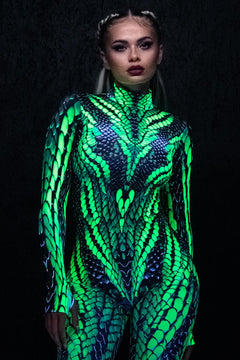
For a brighter trance-inspired look, you might build around colour, print, reflective details or playful accessories.
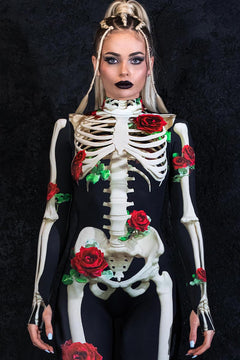
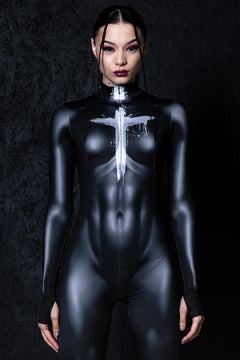
For a darker techno-inspired look, you might start with a black base and use texture, mesh, metallic details, straps, cut-outs or chunky footwear.
But these are only style directions. You can wear black to a trance event. You can wear colour to a techno event. Comfort matters more than matching a stereotype.
Before heading out, test the full outfit. Sit down, reach up, walk around and dance in your shoes. A small irritation at home can become a big problem after hours on the dancefloor.
Explore rave clothing and outfit ideas here:
https://devilwalking.com/collections/rave-clothing-and-outfits
The best outfit is one that fits the venue, expresses your style and lets you enjoy the music without thinking about your clothes all night.

@jess__far wearing Memento Bloom Ruffle Pants Set
Questions About Trance vs techno
What we get asked by customers.
Are trance and techno the same thing?
No. They are distinct electronic dance music genres with connected histories and overlapping sounds. Trance often emphasizes melody, atmosphere and emotional progression. Techno often emphasizes rhythm, groove, repetition and texture.
Is trance always uplifting?
No. Uplifting trance is only one part of the genre. Trance can also be dark, hypnotic, psychedelic, progressive, minimal or intense.
Does techno have melodies?
Yes. Melody does not automatically make a track trance. Many techno tracks use melodic elements, especially melodic techno, Detroit techno and dub-influenced styles.
Is techno always dark?
No. Techno can be dark, industrial and intense, but it can also be warm, soulful, funky, spacious or atmospheric.
Is trance faster than techno?
Not always. Their tempo ranges overlap. BPM is only one part of how a track feels.
Is techno harder than trance?
Sometimes, but not always. Hard techno can be very intense, but some trance styles are also fast and powerful. At the same time, both genres have deeper, softer and more atmospheric sides.
What is the main difference between trance and techno?
The simplest difference is focus. Trance often focuses on melodic progression and emotional release. Techno often focuses on groove, repetition and evolving sound texture.
Which one is better for dancing?
Both are made for dancing. Trance may suit you if you like emotional peaks and long melodic buildups. Techno may suit you if you like staying locked into a steady groove for a long time.
Which should I listen to first?
Start with a few classic examples of each, then follow what you naturally want to hear again. If you remember the melody, explore more trance. If you remember the groove, explore more techno. If you like both, try melodic techno, progressive trance or tech trance.
Final thought
Trance and techno are not enemies. They are different ways of using repetition, rhythm and electronic sound to move a crowd.
Trance often gives you a journey built around melody and release. Techno often gives you a groove that changes slowly until you realize you are fully inside it.
The easiest way to choose between them is simple: listen to full tracks, not clips. Notice what pulls you in. Then follow that feeling.
Pick the music that makes you want to stay on the dancefloor, and wear something that lets you enjoy every minute of it.